Beyond the Box Score: The Texas Coaches Who Turned Dugouts Into Classrooms for Life
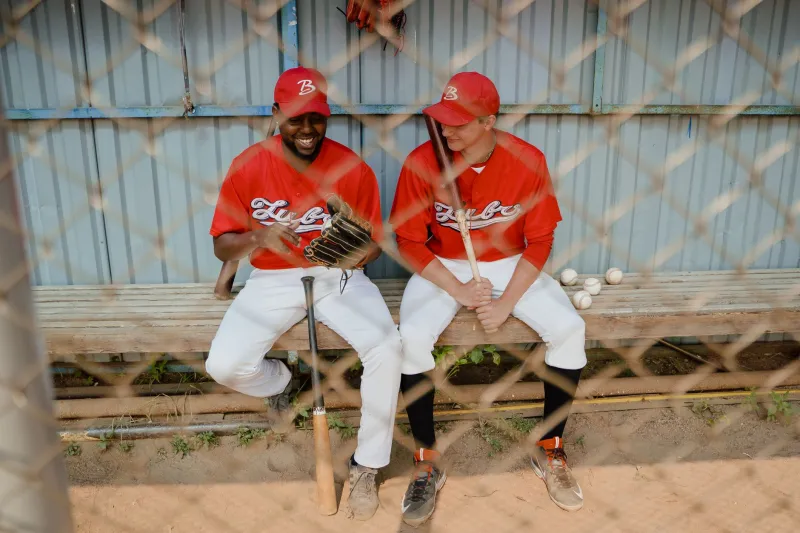
There's a moment most Texas ballplayers can pinpoint — not a home run, not a strikeout, not even a championship — but a quiet conversation in a dugout somewhere between the third and fourth innings that changed everything. Maybe it was a coach pulling them aside after a bad at-bat, not to yell, but to ask a question they weren't ready for. Maybe it was a pregame speech that had nothing to do with baseball at all.
Those moments have a way of sticking around.
Ask any guy from Texas who played the game seriously — high school, junior college, or beyond — and chances are there's a coach somewhere in that story who looms larger than any trophy or stat line. These weren't just baseball coaches. They were, in the most unassuming way, life architects.
The Game Was Never Just the Game
Coach Ray Delgado spent 27 years running the baseball program at a mid-sized high school outside San Antonio. He never made the news. Never coached a future All-Star. But if you talk to the men who played for him — now in their 30s and 40s, running businesses, raising families, navigating all the curveballs life throws — his name comes up like a refrain.
"He used to say, 'How you handle a dropped fly ball is exactly how you're going to handle getting passed over for a promotion,'" says Marcus Treviño, 41, who played for Delgado in the mid-90s and now manages a logistics company in Austin. "At the time, I thought he was being dramatic. Now I quote him to my own employees."
That kind of intentional coaching — using the diamond as a mirror for real-world behavior — is something deeply woven into Texas baseball culture. The state has long produced elite talent, sure. But the coaches who leave the deepest marks aren't always the ones chasing championships. They're the ones who figured out that a teenager scared of striking out is really just scared of being seen as not enough. And they coached that.
Accountability Without Cruelty
One of the most common threads running through conversations with former Texas players is the distinction between coaches who demanded accountability and coaches who used humiliation as a tool. The ones remembered fondly — the ones who shaped character rather than just baseball IQ — understood that difference instinctively.
Derek Fontenot, 38, grew up in Beaumont and played under a coach named Bill Hargrove who had a simple rule: you never blamed a teammate, not even when it was their fault. "If somebody booted a grounder that cost us the game, we talked about it as a unit," Fontenot recalls. "Coach Hargrove would say, 'What could you have done differently to make that easier for him?' It drove us crazy at 16. But man, that thinking got me through some rough spots in my marriage, in business — all of it."
Hargrove, now retired and living outside Houston, doesn't make a big deal of his approach when reached by phone. "I just didn't want to send boys out into the world who pointed fingers," he says with a laugh. "Baseball was the easiest place to teach that. You've got nine guys out there. Nobody wins alone."
The Hard Conversations Coaches Weren't Supposed to Have
Texas coaches who doubled as mentors often operated in spaces that technically fell outside their job description. They talked about fathers who weren't around, about pressure from families who saw baseball as a meal ticket, about the mental weight of being the town's great hope.
In smaller Texas communities especially, high school baseball carries a kind of civic gravity. The Friday night lights get most of the attention, but the Saturday morning diamond holds its own kind of mythology. And coaching in that environment means understanding that the kid in the batter's box is carrying more than just a bat.
"My coach in Corpus Christi — Coach Salinas — he knew I was dealing with stuff at home," says Javier Mendez, 44, now a high school principal in the Rio Grande Valley. "He never made it awkward. He'd just find ways to check in. After practice, 'Hey, you eating enough?' Stuff like that. It sounds small, but when you're 15 and things are rough, somebody noticing matters more than you can say."
Mendez went on to play college ball but says he never made it to the professional level. He doesn't sound the least bit bitter about it. "I got something better out of baseball than a career," he says. "I got a blueprint for how to treat people."
What They Carried Out of Texas
It's worth noting that many of these coaches never left Texas — never wanted to. There's something about the state's baseball culture that breeds a certain kind of lifer, a coach who could've moved up the ladder but chose to stay planted in the same community, year after year, shaping the same kind of young men season after season.
That rootedness matters. It means the lessons don't feel abstract. When Coach Delgado talks about handling adversity, he's talking about it in the same town where his players are going to face it. When Coach Hargrove preaches accountability, it's in a community where everyone knows everyone, and your reputation is something you actually have to live with.
Texas baseball has always been about more than developing prospects. At its best, it's been about developing people.
Passing It On
Perhaps the most telling sign of a great mentor-coach is what happens when their players grow up. Treviño coaches his son's Little League team in Austin now. Fontenot volunteers with a youth program in Beaumont every summer. Mendez built his school's baseball culture from scratch when he became principal, leaning hard on the lessons Salinas taught him two decades ago.
The cycle continues, quietly and without much fanfare, out on dusty diamonds across the state.
"I catch myself saying things Coach said to me," Treviño admits. "Word for word sometimes. And I think — yeah, that's how this works. That's how it's supposed to work."
The scoreboards get wiped clean at the end of every season. The trophies collect dust. But somewhere in Texas right now, a coach is pulling a kid aside between innings and saying something that kid will still be thinking about when he's 40. That's the real legacy of Texas baseball — not the scouts and the draft picks and the highlight reels, but the quiet, lasting work done in the dugout by coaches who understood that the game was always the least important part of what they were teaching.