Diamond Queens: How Texas Softball Built a Dynasty the Baseball World Can't Ignore

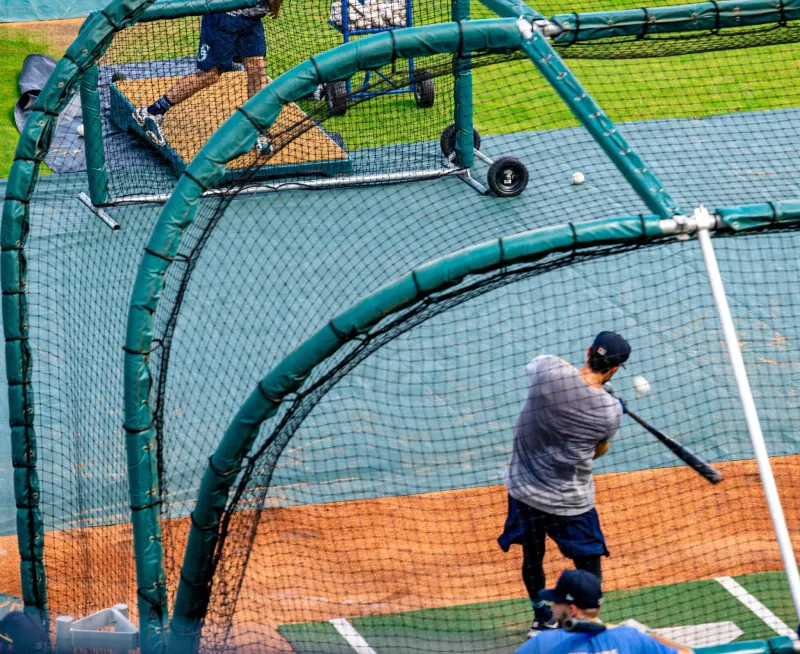
Photo by Photo by Alex Moliski on Unsplash on Unsplash
Let's be honest about something. When most people in Texas talk about "baseball culture," they're picturing boys. They're picturing dusty cleats and metal bats and fathers playing catch in the backyard while pickup trucks idle nearby. That image isn't wrong, exactly — but it's incomplete in a way that's starting to look embarrassing.
Because while everyone's been celebrating the Lone Star State's pipeline of MLB draft picks and D1 baseball signees, something equally extraordinary has been happening sixty feet away on the adjacent diamond. Texas girls' softball has quietly — and then not so quietly — built one of the most dominant sports cultures in the country. And if you're serious about understanding Texas baseball, you need to understand what's happening over there.
A Different Diamond, the Same Fire
The fundamentals aren't as different as people assume. Pitching mechanics, defensive footwork, situational hitting, the mental grind of playing a long season — these are shared languages between baseball and softball, and Texas athletes have been fluent in both for a long time.
What's changed in the last two decades is visibility. The growth of travel softball, the expansion of college scholarships, and the emergence of Athletes Unlimited and other professional leagues have given Texas softball players a ladder that didn't really exist for their mothers' generation. And they have been climbing it aggressively.
Look at any major Division I softball program in the country — Oklahoma, Alabama, UCLA, Florida — and you'll find Texas kids on the roster. Not a few of them. A lot of them. Texas has become one of the premier exporting states for elite softball talent, and the infrastructure behind that pipeline looks a whole lot like the baseball infrastructure that everyone already respects.
"The travel ball culture in Texas softball is every bit as serious as baseball," said Amanda Reyes, a former high school coach in the Dallas-Fort Worth area who now runs a softball training academy. "These girls are getting recruited at 14, 15 years old. They're training year-round, working with pitching coaches, studying film. The commitment level is identical."
What Baseball Could Learn From the Softball Side
Here's where it gets interesting — and a little uncomfortable for the baseball establishment.
In several meaningful ways, Texas softball has developed coaching and player development practices that baseball programs would benefit from studying. The emphasis on mental skills training, for instance, has been more thoroughly integrated into elite softball programs than in most comparable baseball setups. Pitchers in softball face unique psychological challenges — they throw every game, often multiple games in a tournament weekend, and must manage fatigue while maintaining composure in high-leverage situations — and the coaching culture has had to evolve accordingly.
"We talk about the mental game constantly," said one DFW-area travel ball coach who has sent multiple players to Power Five programs. "Visualization, breathing, managing pressure at the plate — we work on that stuff like it's a skill, because it is. And honestly, I think we're ahead of a lot of baseball programs in that area."
The cross-pollination of ideas between baseball and softball families in Texas is already happening organically. Brothers and sisters who grew up in the same household, playing the same backyard games, absorbing the same coaching philosophies. Parents who coach both. Facilities that serve both communities. The sports are more intertwined in Texas than the separate headlines suggest.
The Names You Should Know
Texas softball has produced a remarkable collection of athletes who have gone on to dominate at the college and professional levels. Without reducing these women to a simple list, it's worth acknowledging the scope of what the state has contributed to the sport nationally.
From the Gulf Coast to the Panhandle, Texas programs have developed pitchers with elite spin rates and movement profiles that would make any baseball scout raise an eyebrow, hitters with barrel awareness and plate discipline that translates directly to advanced metrics, and outfielders with routes and arm strength that challenge any comparison you'd care to make.
These aren't parallel stories happening alongside Texas baseball — they're part of the same story. The same dirt, the same heat, the same relentless competitive culture producing athletes of exceptional quality across both sports.
The Infrastructure Is Already There
One of the underappreciated realities of Texas softball is how deeply the institutional support has developed. The UIL state tournament for girls' softball draws crowds and media attention that would have seemed impossible twenty years ago. High school programs in suburban districts have facilities that rival small college setups. The coaching talent pool has grown substantially as former college and professional players have returned to Texas to build careers in player development.
Amanda Reyes puts it plainly: "We're not borrowing from baseball culture anymore. We built our own. And honestly? It's thriving."
That independence matters. Early on, softball in Texas leaned heavily on baseball's infrastructure and credibility. That's less true now. The sport has its own identity, its own stars, its own passionate community of parents and fans and former players who are invested in growing it further.
Why the Boys Should Be Watching
This isn't about competition between the sports. Nobody serious is arguing that softball should replace baseball or that one is more legitimate than the other. What we're saying is that the artificial separation between the two — the assumption that baseball is the "real" Texas baseball culture and softball is something adjacent and lesser — is outdated and honestly a little silly.
The toughness that Texas baseball prides itself on? It's alive and thriving on the softball diamond. The grit, the team culture, the ability to compete in brutal conditions and still find a way to win — those qualities don't belong to one gender or one sport. They belong to Texas.
If you're a baseball parent, go watch a high-level softball game sometime. Bring your kid. Watch how the pitcher attacks the zone, how the shortstop ranges on a ball in the hole, how the cleanup hitter works a count. You might be surprised how much you recognize.
The Lone Star Belongs to Everyone
Texas baseball culture has always been about more than just the sport itself. It's about community, identity, the values that get passed down from one generation to the next on a dusty diamond under a wide-open sky. Those values don't discriminate. They never did.
The girls who grew up throwing in their backyards, who hauled equipment bags to 6 a.m. practices, who competed their way through the brutal Texas travel ball circuit and came out the other side as elite athletes — they're part of this story. They always were.
It's past time we told it that way.
The diamond queens of Texas softball didn't build their empire by waiting for permission. They built it the same way everything worth having gets built in this state — through hard work, heat, and a stubborn refusal to accept limits.
That sounds pretty Texas to us.