Why MLB Scouts Keep Coming Back to Texas: The Talent Pipeline That's Rewriting the Draft
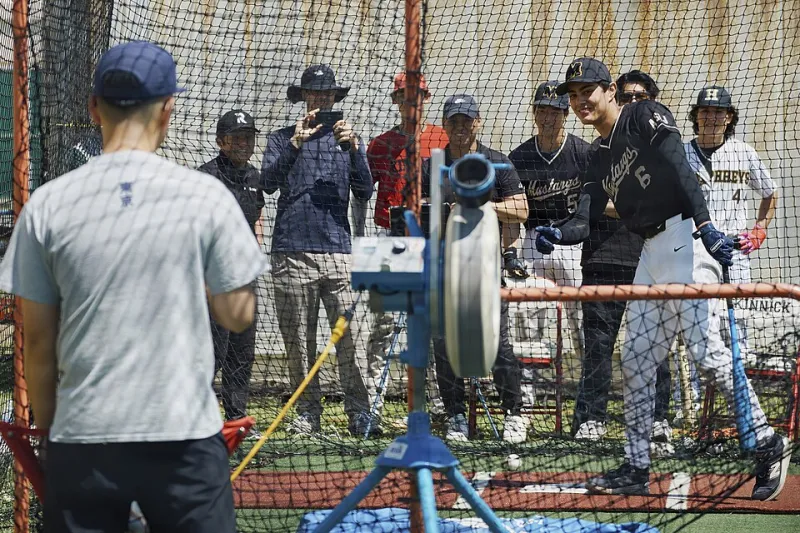
Photo: U.S. Navy photo by James Kimber, Public domain, via Wikimedia Commons
There's a running joke among baseball scouts that if you want to find your next first-round pick, you've got two options: spend six months crisscrossing the country, or just drive around Texas for a few weeks and let the talent come to you.
It's funny because it's not entirely wrong.
Over the past several MLB drafts, Texas has punched well above its weight as a talent-producing state. And it's not just raw numbers — it's the quality, the positional variety, and increasingly, the readiness of those players when they arrive at pro ball. Front offices have noticed, and they're responding with their wallets and their calendars.
So what exactly is going on down here? Why has Texas turned into ground zero for MLB talent evaluation, and why does it keep getting more intense every year?
The Infrastructure Advantage Is Real
Let's start with the basics, because they matter more than people realize. Texas has the population to produce talent — that's obvious. But population alone doesn't build baseball players. What Texas has built over the decades is a layered, interconnected development system that few states can match.
Start at the youth level. Travel ball in Texas is a year-round enterprise. The weather allows for outdoor training and competition in months when players in northern states are stuck in cages or sitting on their couches. By the time a Texas kid reaches high school, he's already logged hundreds of competitive innings or at-bats that players from colder climates simply haven't accumulated.
High school ball in Texas is its own creature. The University Interscholastic League (UIL) classification system creates legitimate competitive tiers, meaning elite programs face elite programs with real stakes. That's not always the case in states where talent is more spread out and the competition thinner. Texas high school baseball has genuine playoff pressure, and scouts know that the players performing in those environments have been tested.
Then there's the college layer. The Big 12, Conference USA, the American Athletic Conference, and the Sun Belt all run programs in Texas. The University of Texas, Texas A&M, TCU, Rice, Dallas Baptist — these aren't just regional programs. They're nationally ranked programs that regularly send players to the draft. A scout who wants to evaluate college talent in Texas can see multiple top-25 programs without ever leaving the state.
The Coaching Factor
Infrastructure explains part of the story. Coaching explains a lot of the rest.
Texas has quietly built one of the deepest coaching trees in amateur baseball. Successful college coaches have produced assistant coaches who become successful college coaches elsewhere, and many of them eventually return to Texas programs. High school coaching, meanwhile, has attracted a wave of former college and minor league players who've brought professional-level instruction into prep programs.
This coaching depth has a compounding effect on player development. A pitcher in suburban Houston or the San Antonio metro isn't just getting reps — he's getting high-quality instruction from coaches who understand what professional organizations are looking for. The technical gap between high-level Texas prep baseball and low-level affiliated ball has narrowed considerably over the last decade.
Scouts have picked up on this. Players arriving from Texas programs tend to have cleaner mechanics, better understanding of pitch sequencing, and more developed approach at the plate than many of their counterparts from other regions. That translates to faster development timelines in the minors, which is exactly what modern front offices are chasing.
Draft Picks Tell the Story
The numbers back up the anecdotal evidence. In recent MLB drafts, Texas has consistently ranked among the top states in total picks, and more importantly, in high-round picks. Position players and pitchers alike have been flowing out of both the prep and college ranks at a pace that's drawn serious organizational attention.
Consider the path of players like Kumar Rocker out of Vanderbilt (who grew up in Georgia but trained extensively in Texas prep environments) or the steady stream of arms out of programs like UT and TCU. Or look closer to the prep level — players from programs in the Houston suburbs, the DFW Metroplex, and Central Texas have shown up in the first three rounds with increasing regularity.
Front offices have responded by stationing more full-time area scouts in Texas, expanding their coverage in regions that were previously considered secondary markets. The Rio Grande Valley, East Texas, and the Panhandle — areas that might have gotten one scouting visit per spring a decade ago — are now seeing multiple visits per prospect.
The Year-Round Advantage Keeps Compounding
Here's the piece of this puzzle that doesn't get enough attention: the competitive calendar in Texas never really stops. Between UIL ball in the spring, summer leagues, fall instructional programs, and travel ball circuits that run nearly year-round, a motivated Texas player can accumulate game reps at a pace that's almost impossible to match in most other states.
For scouts evaluating projection and development ceiling, that matters enormously. A player who's been competing at a high level for eleven months a year by the time he's seventeen has a development baseline that compresses timelines in pro ball. Organizations don't have to spend the first year or two just getting him ready to compete — he already knows how.
What This Means for Texas Baseball Fans
For those of us who've been watching Texas baseball our whole lives, none of this is exactly surprising. We've always known the talent was here. What's gratifying is watching the rest of the baseball world finally catch up to what we've understood for years.
The scouts are going to keep coming. The draft picks are going to keep rolling. And somewhere right now, in a high school dugout in Corpus Christi or a college bullpen in Fort Worth, the next wave is already being developed.
Texas baseball isn't a pipeline that's running dry anytime soon. If anything, it's just getting wider.